Antibiotic resistance is one of the greatest threats to global health. In response to this challenge, a team of ESPOL researchers, in collaboration with other national and international institutions, has developed an innovative "dual" strategy that uses local natural resources to produce nanoparticles and combine them with a virus to fight resistant bacteria such as Escherichia coli.
A dual ally against bacteria?
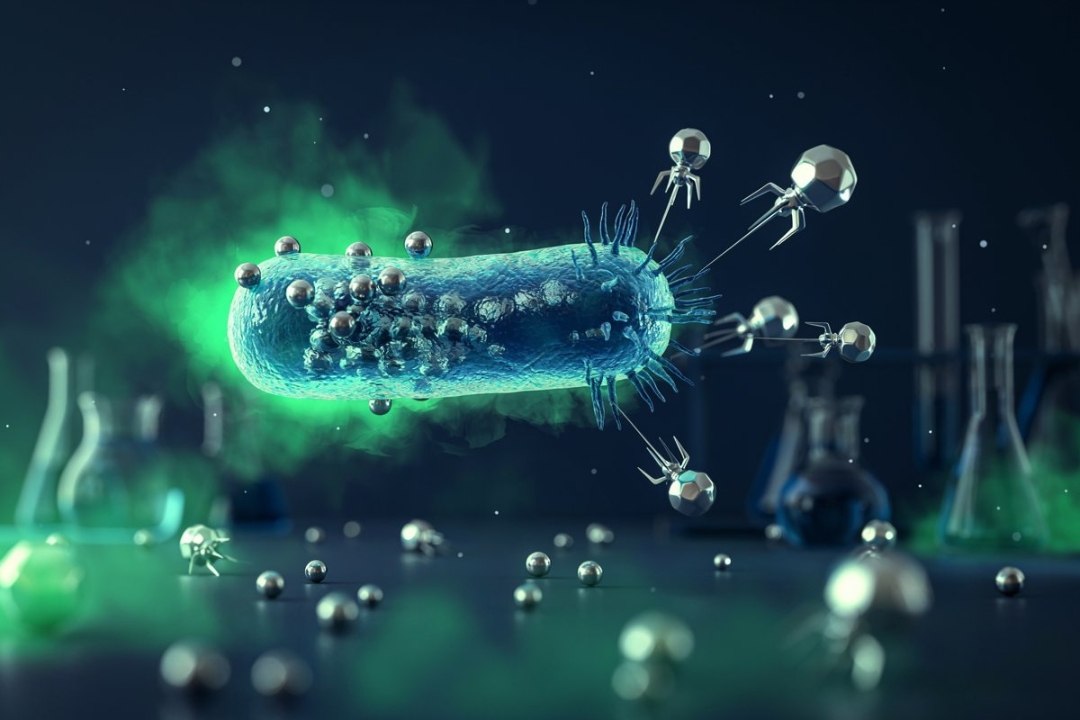
The study successfully developed a formulation that combines two powerful elements: silver nanoparticles (AgNPs) synthesized through a "green" method using leaf extract from an endemic Ecuadorian plant (Psidium guayaquilensis) and a bacteriophage (a virus that attacks bacteria) called BME3.
This combination works as a specialized team: while the phage identifies and specifically attacks the bacteria, the silver reinforces its action, eliminating it completely. Most notably, this mixture requires only half the amount of silver that would be needed if the metal were used alone, reducing potential toxic effects and costs.
The problem and the solution
Historically, the use of silver nanoparticles has been limited by concerns about their toxicity when they accumulate in the environment, while phage therapy often fails because bacteria can quickly develop resistance. By combining both approaches, the scientists were able to overcome these barriers: the combined effect eliminates the bacteria in just 10 hours, preventing the bacterial regrowth that often occurs with other treatments.
"We demonstrated that combining green silver nanoparticles with a specific phage makes it possible to eliminate E. coli, offering a safer, more sustainable, and effective treatment against antimicrobial resistance," highlights Ph.D. Joel Vielma-Puente.
Path toward practical applications
The production method, validated through advanced microscopy techniques and statistical analysis, makes it possible to produce these nanoparticles in a reproducible manner. This technology could potentially be integrated into water filters or wastewater treatment systems in the future, helping to clean contaminated water sources before they reach rivers, seas, oceans, and other bodies of water.
Following this promising laboratory success, the research team is preparing to conduct stability and safety tests, essential steps before this technology can be scaled up for applications in real-world settings.
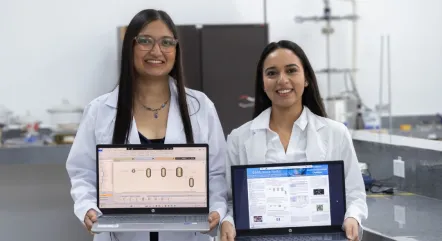
This scientific advance is a clear example of the academic community's commitment to innovation, highlighting the leadership of Ph.D. Joel Vielma-Puente, a researcher at the Faculty of Natural Sciences and Mathematics (FCNM) of ESPOL, whose scientific vision has been fundamental in bringing together this high-impact interdisciplinary collaboration.
Research Team: Joel Eduardo Vielma Puente, Julio de la Paz Cruz, Marynés Montiel, Belén Toaquiza Vilca, Alexis Debut, Yuraima Fonseca, and Xavier Cornejo.
Full scientific article: Available to the academic community and interested readers on ScienceDirect.