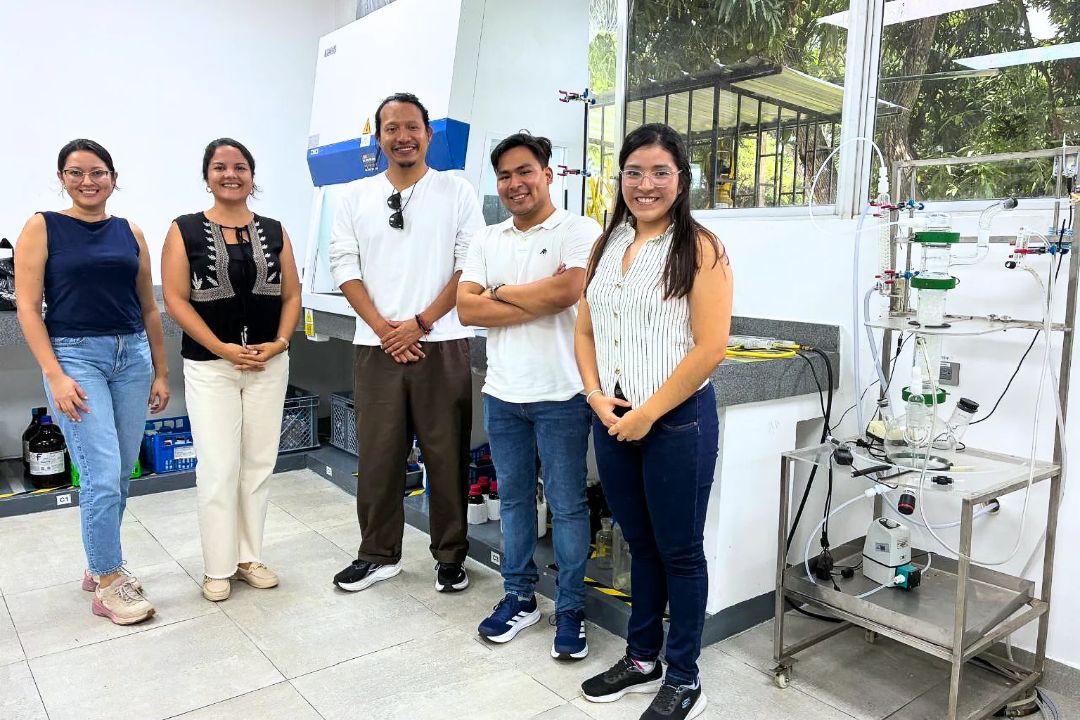


Collaborative work between ESPOL researchers and the Dutch university drives technological innovation, laboratory methodological development, and the training of undergraduate and graduate students.
The campus of the Escuela Superior Politécnica del Litoral (ESPOL) hosted a valuable scientific gathering during the visit of Dr. Luis Cutz, professor and researcher at the prestigious Delft University of Technology (TU Delft) in the Netherlands. His visit took place within the framework of the research project Thermochemical Valorization of Agro-Industrial Waste, led by Dr. Diana Tinoco, professor and researcher in the Chemical Engineering program at the Faculty of Natural Sciences and Mathematics (FCNM).
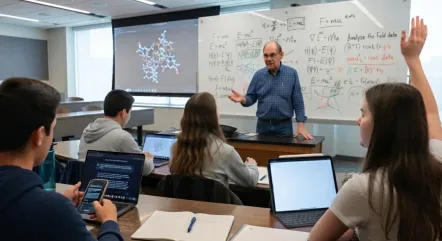
During the working sessions, strategic meetings were held directly at FCNM's Process Engineering Laboratory to review experimental methodologies, optimizing analytical techniques for the efficient utilization of biomass and agricultural waste.
Multidisciplinary Vision and Academic Synergies
Additionally, the agenda featured dialogue sessions with researchers from other fields to discuss multidisciplinary proposals and international grant applications. This integration across diverse disciplines aims to expand the reach of research projects, connecting chemical engineering with other specialties to tackle sustainability challenges through a comprehensive approach.
Connecting with the Student Community
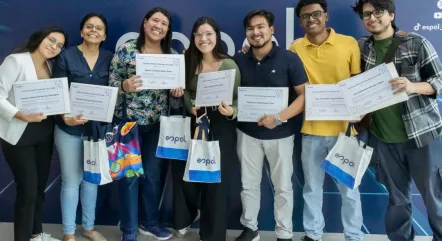
Beyond the technical advancements in the lab, the professor's stay provided a direct space for learning and interaction with undergraduate and graduate Chemical Engineering students. During this gathering, participants discussed global sustainability trends, academic mobility, and applied research.
Through initiatives like this, FCNM reaffirms its commitment to academic excellence, internationalization, and the generation of knowledge that directly impacts the transition toward a circular economy.