FCNM and ESPOL Strengthen Partnership with HOGENT to Advance Academic and Research Mobility
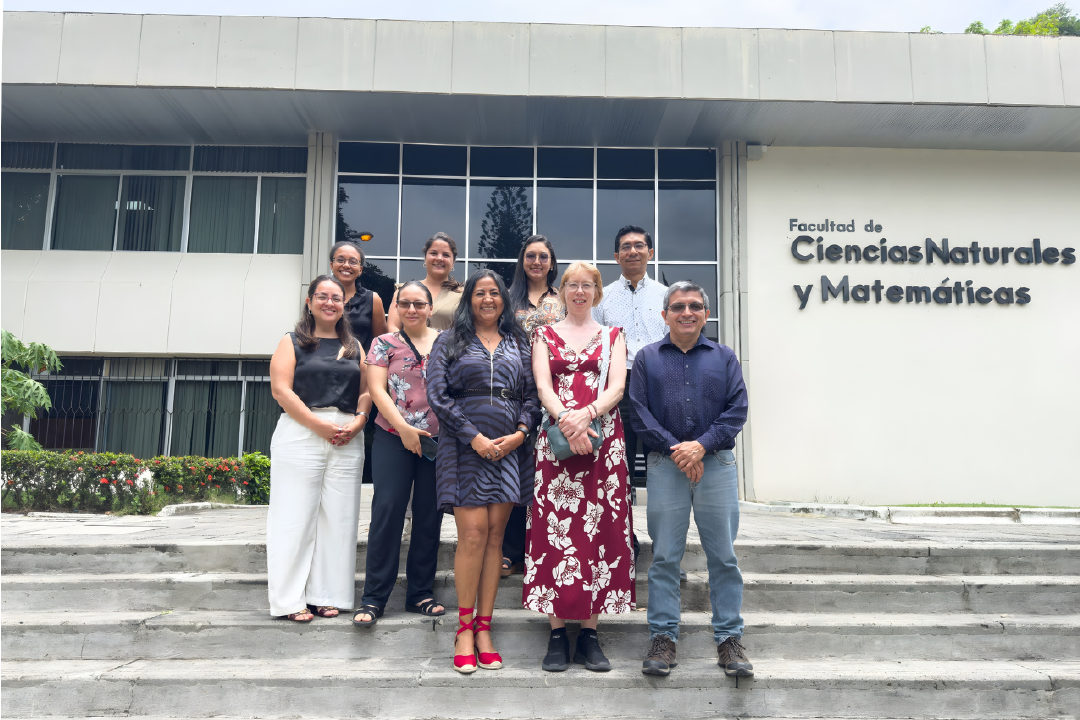
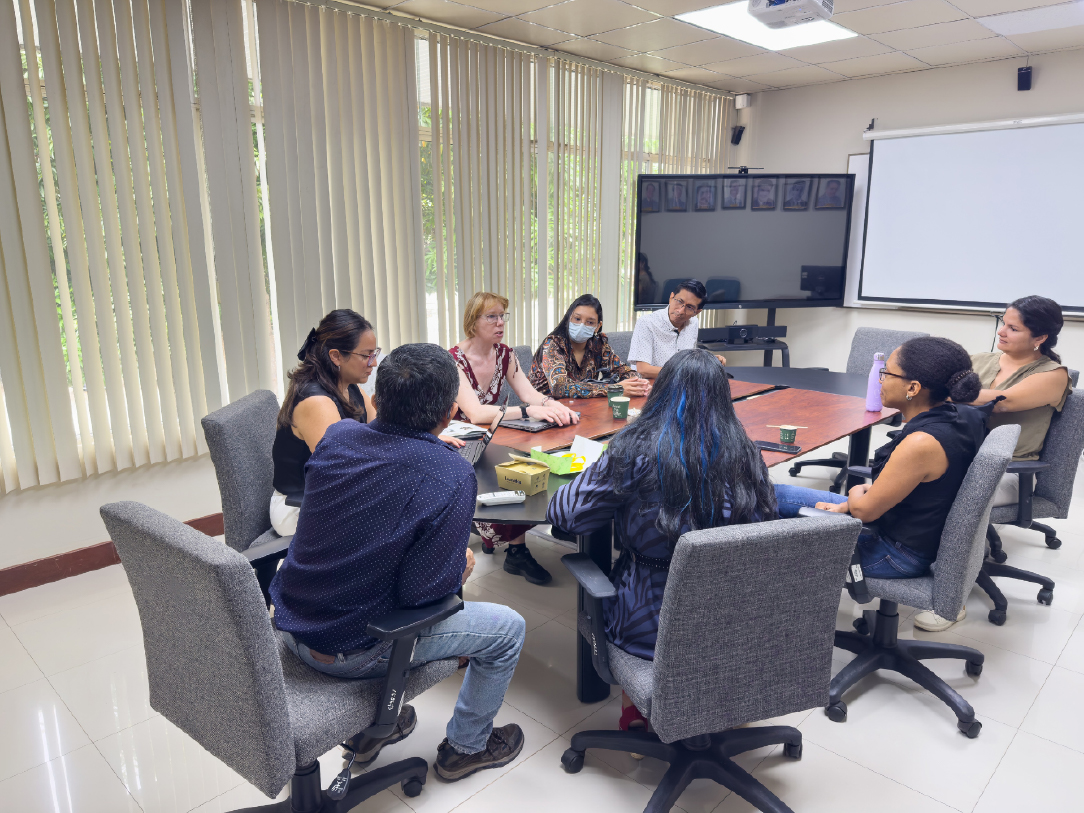
Knowledge knows no borders. On March 23, the Faculty of Natural Sciences and Mathematics (FCNM) at ESPOL welcomed Christine Van der Heyden, professor at HOGENT University of Applied Sciences and Arts (Belgium), in a visit that strengthens international academic cooperation and creates new opportunities for student mobility between Ecuador and Europe.
The primary objective of the visit was to promote international academic mobility between the two institutions within the framework of a longstanding collaboration that has developed over several decades and was formalized through an interinstitutional agreement that has been in effect since 2024. As part of this strategy, representatives also discussed a joint application to the European Union’s Erasmus+ program, one of the leading initiatives supporting academic exchange between universities in Europe and Latin America.
Student Mobility and Scientific Cooperation: Key Pillars of the ESPOL–HOGENT Partnership
The meeting provided an opportunity to identify specific areas in which collaboration between the two universities can be further strengthened, particularly in fields of shared academic interest:
Statistics and Data Analysis
Chemical Engineering (at both undergraduate and graduate levels)
Applied Research in Water Resources and Agroindustry
These areas reflect the strong alignment between FCNM’s academic programs and HOGENT’s research centers and educational offerings, creating opportunities for student and faculty exchanges as well as the development of joint research projects.
The vision is clear: to expand international student mobility so that ESPOL students can gain academic experiences in Europe, while European students have the opportunity to discover the innovation and knowledge being developed in Ecuador. At the same time, the partnership seeks to promote faculty mobility and collaborative research initiatives that transcend disciplinary and geographic boundaries.
Image
Erasmus+ Opportunities for ESPOL Students
The proposal submitted by HOGENT, which includes ESPOL as a partner institution, represents an important opportunity to further strengthen this collaboration. The results of the application are expected to be announced in the coming months. If approved, the initiative could create new opportunities for the faculty’s academic community, including:
Academic exchanges at European universities
Participation in international research projects
Training and learning experiences in global environments
A Strategic Partnership Between ESPOL and HOGENT with International Reach
The relationship between ESPOL and HOGENT is built upon a long history of academic and scientific collaboration, particularly in the fields of environmental sciences, water resources, and chemical engineering. This partnership was further strengthened in 2024, when both institutions formalized their cooperation through an interinstitutional agreement, establishing a solid foundation for sustained scientific and academic collaboration based on mutual trust and shared goals.
At that time, international delegations visited key FCNM facilities, including the Water and Sediment Processing Laboratory (PAS) and the Unit Operations Laboratory (LOPU). During her recent visit, Professor Christine Van der Heyden met with university authorities, faculty members, and researchers working in chemistry, water-related studies, and statistics, identifying new opportunities to expand collaboration into complementary areas.
FCNM actively works to strengthen international scientific cooperation networks that support both long-term collaborative research and academic mobility. Partnerships of this nature reinforce our commitment to a globally connected higher education experience aligned with international standards.