
How can green hydrogen be stored and utilized more efficiently? This question inspired a research project conducted at ESPOL’s Faculty of Natural Sciences and Mathematics (FCNM). The study explored the production of a biomass-derived liquid capable of carrying hydrogen, offering a potential alternative for its storage and utilization.
Although previous studies have investigated the production of this hydrogen-rich liquid, important questions remained regarding how it is formed and how efficiently it could be produced on an industrial scale. Understanding this process is essential because it helps identify the optimal conditions for obtaining the desired product while minimizing energy losses during production.
This topic is particularly relevant in the transition toward a hydrogen-based economy, where the safe storage, transportation, and utilization of hydrogen continue to present significant challenges. In this context, biomass-derived compounds offer a promising alternative for producing renewable molecules that can serve as green solvents and potential hydrogen carriers.
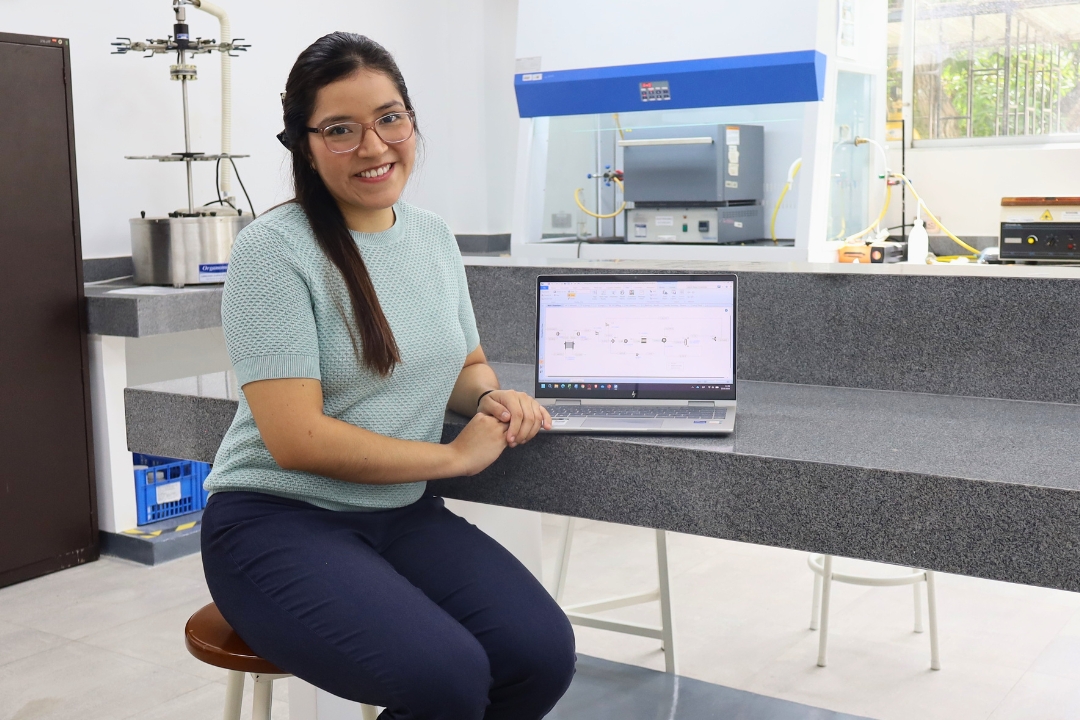
The research findings were published in the International Journal of Hydrogen Energy, a Q1-ranked journal that is also classified within the top decile (D1) of its field. The study’s lead author is Kelly Beltrán Borbor, M.Sc., who conducted this research as part of her Master’s thesis in Chemical Engineering while working as a research technician at FCNM. The research team also included faculty researchers Christopher Varela, Ph.D., Andrea Barcia, M.Sc., and Diana Tinoco Caicedo, Ph.D.
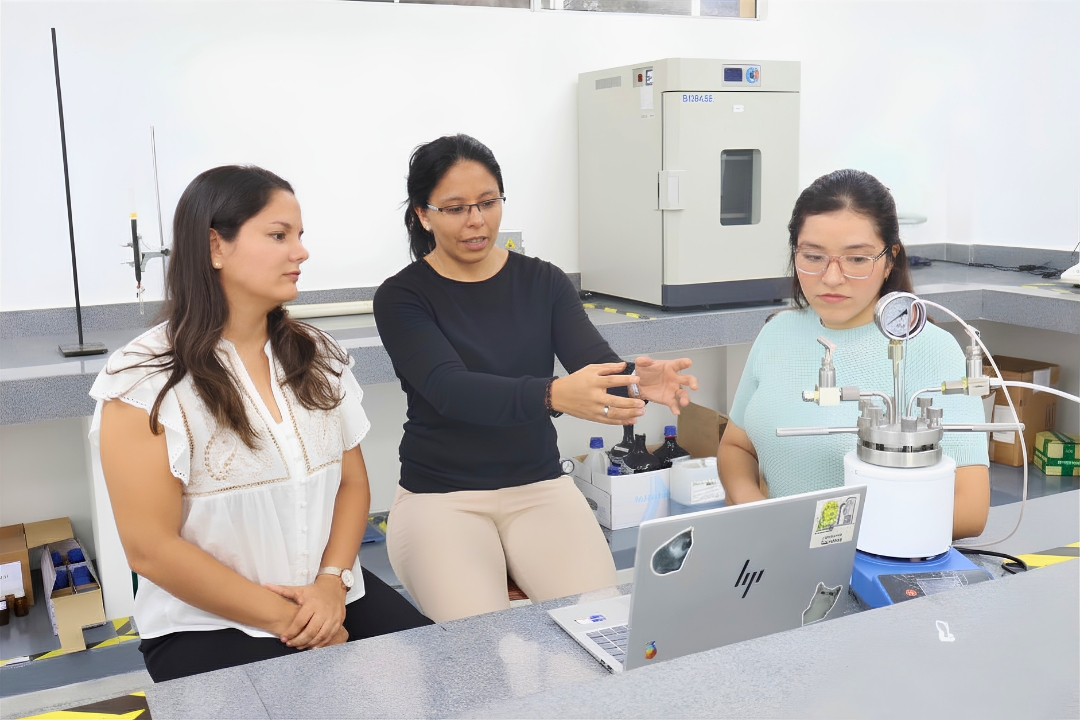
To analyze the conditions that favor its production and determine the efficiency of the process, the research team employed mathematical modeling, process simulation, and exergy analysis. Using experimental data reported in the scientific literature, they developed a kinetic model to describe the hydrogenation of furfural and evaluated how different operating conditions affect the production of tetrahydrofurfuryl alcohol (THFA), the process’s energy efficiency, and system losses.
The study’s main finding showed that THFA production can achieve an overall exergy efficiency of 77.32%, highlighting the potential of this pathway for applications related to the hydrogen economy. The researchers also identified that most energy losses occur in the electrolyzer and the hydrogenation reactor.
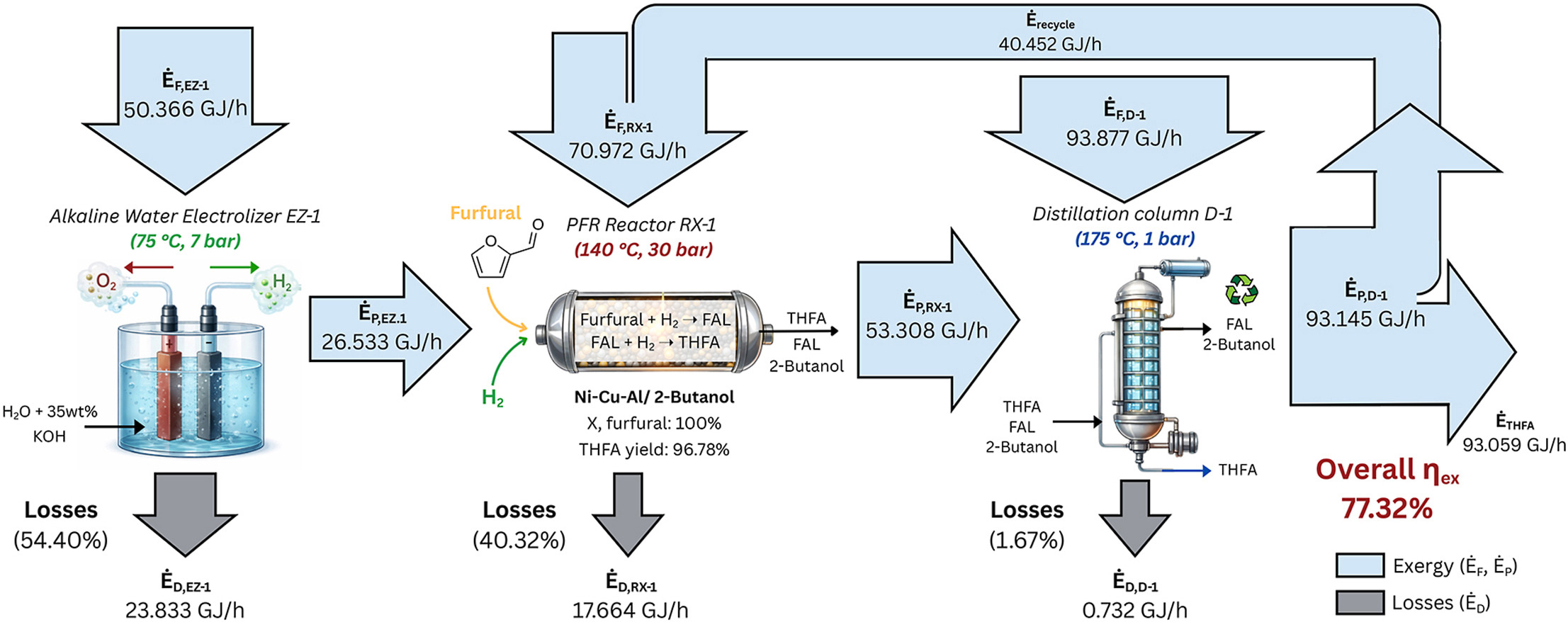
These findings provide valuable guidance for future optimization strategies, including heat recovery alternatives and energy integration approaches aimed at reducing the identified losses.
Building on these results, the next step will be to advance toward an experimental phase to validate and further refine the developed model, while also exploring new strategies to optimize the process.
The findings provide new evidence on how to improve the energy utilization of biomass-derived compounds and contribute to the development of technologies associated with green hydrogen storage.
Research projects like this demonstrate how the work carried out at ESPOL’s Faculty of Natural Sciences and Mathematics contributes to addressing today’s challenges through science and innovation. Through the efforts of its faculty, researchers, and students, FCNM generates knowledge that supports sustainable development and strengthens academic excellence.
Read the scientific article here:
https://www.sciencedirect.com/science/article/pii/S0360319926023281