Every year, 45 million tons of municipal wastewater sludge are generated worldwide, a byproduct of wastewater treatment plants. Managing it is costly and complex. But what if, instead of being a problem, it could become a raw material?
That is what Luis Eduardo Romero Hidalgo, Ph.D., researcher at FCNM, explored together with a team from the University of Oviedo (Spain), including Juan Fernando Moreno, Paula Oulego Blanco, Sergio Collado Alonso, and Mario Díaz Fernández. Their study, published in the Journal of Environmental Chemical Engineering (Q1), subjected this sludge to thermal treatment to release useful nutrients without generating toxic compounds that could interfere with the process.
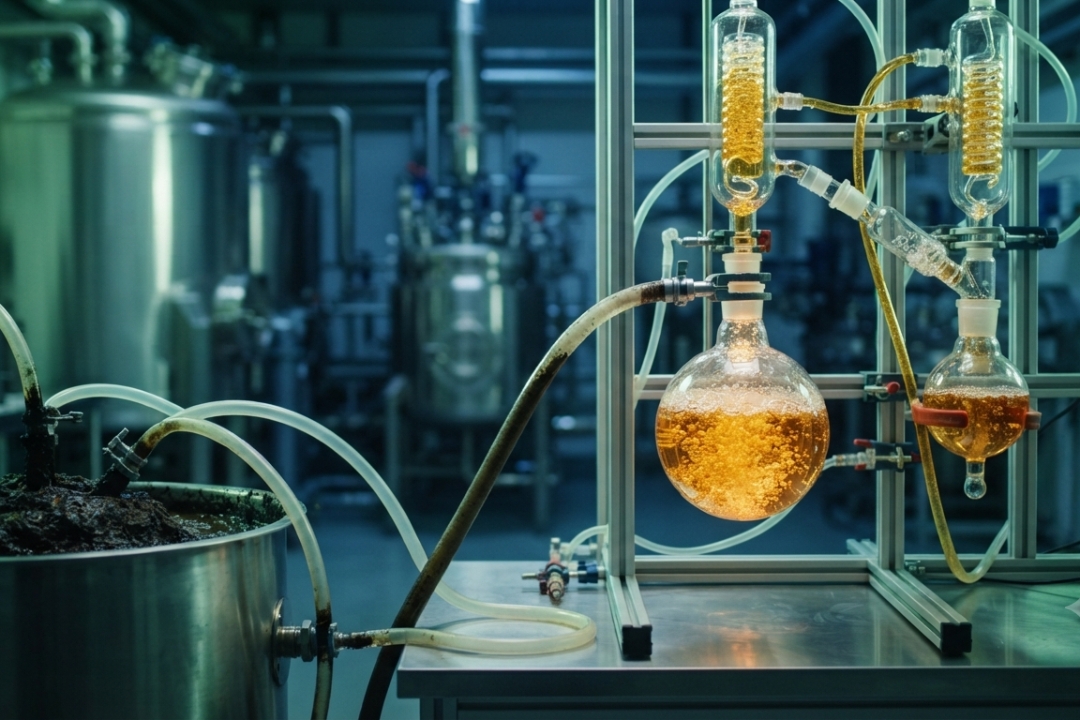
The study involved subjecting the sludge to high pressure and temperature under both an oxidizing atmosphere (O2) and an inert atmosphere (N2), breaking down its structure to extract carbohydrates and proteins. The key finding: when the treatment was applied at 170°C for 60 minutes, the resulting liquid — rich in biopolymers and with low toxicity — became a suitable growth medium. When used to feed the bacterium Zymomonas mobilis, it achieved a high bioethanol production yield without the need for the costly synthetic nutrients normally required.
"Our research shows that municipal wastewater sludge is not simply a problematic waste, but a valuable source of nutrients capable of supporting the sustainable and cost-effective production of biofuels in the biorefineries of the future," says Luis Romero Hidalgo.
The finding opens up a concrete possibility: existing wastewater treatment plants could also operate as biorefineries, turning their own waste into valuable growth media and reducing biofuel production costs in the industry.
The team's next steps focus on addressing the technical challenges involved in separating and purifying bioethanol from the fermented liquid, as well as evaluating the behavior of mixed bacterial communities and the feasibility of scaling up the process to an industrial level.
This study is another example of the research conducted by FCNM faculty members in collaboration with international institutions, bringing cutting-edge topics such as waste valorization and sustainable biofuel production to high-impact scientific publications.
Would you like to learn more about the technical details of the research?