Leaf-based biopesticide wins the FCNM 5-Minute Pitch

Leaf-based biopesticide wins the FCNM 5-Minute Pitch

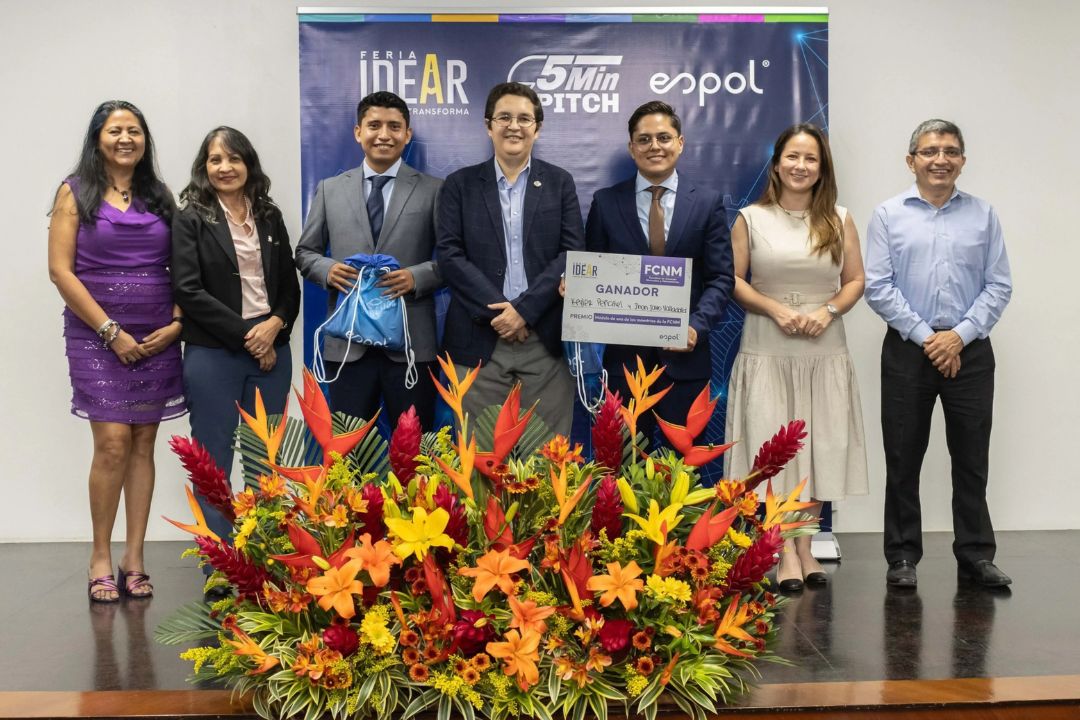
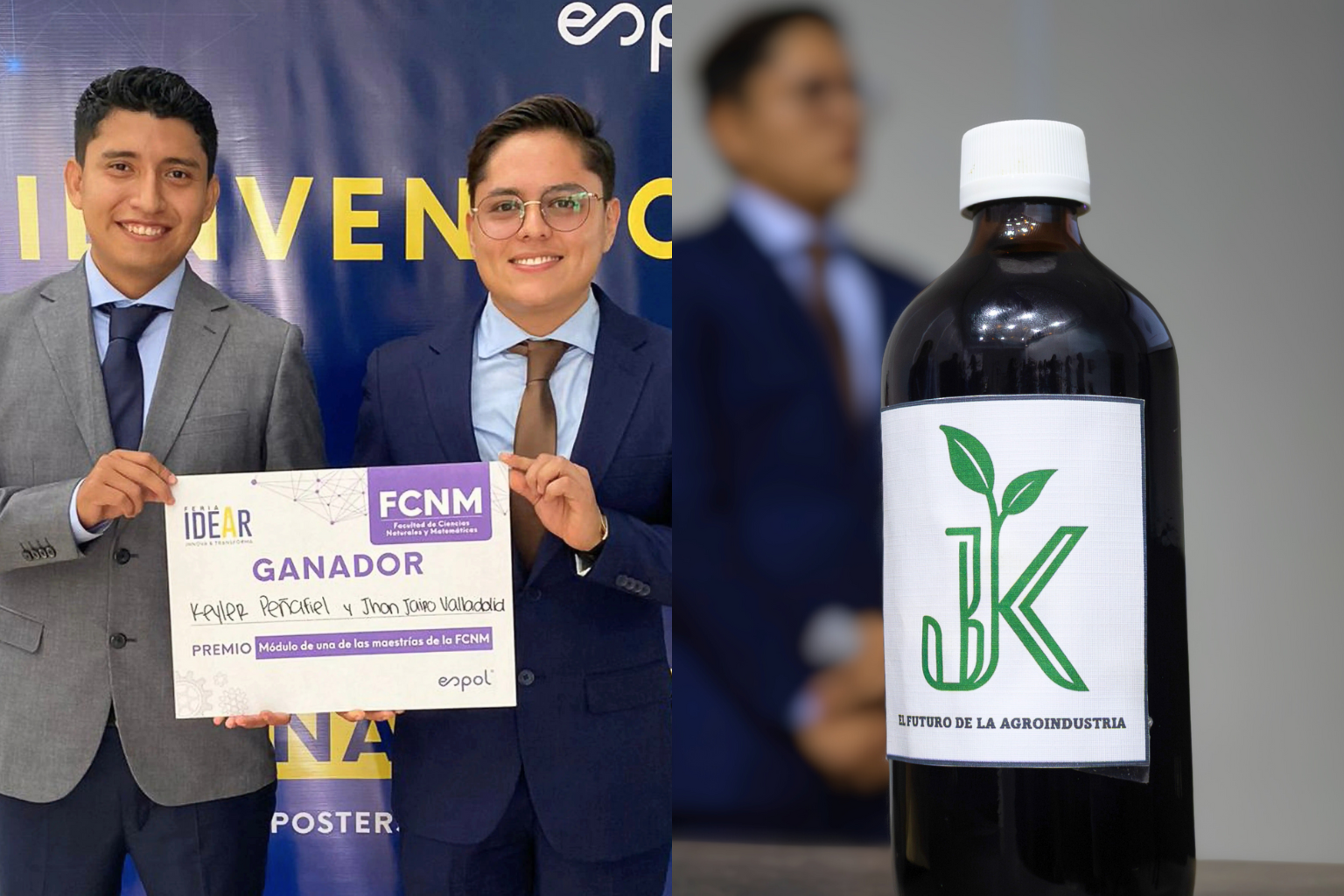
Two outstanding Chemical Engineering students, Keyler Peñafiel and Jhon Jairo Valladolid, were named the winners of this edition of the 5 Minutes Pitch competition. Their innovative proposal—a biopesticide and biorepellent made from American Cedar leaves—captivated the judges and secured first place among six finalist teams.

The idea behind the product, called JK, emerged from the desire to give value to a byproduct of the timber industry, a sector that contributes 13.56% of Ecuador’s manufacturing GDP. Through their creativity and entrepreneurial vision, Keyler and Jhon Jairo transformed this industrial residue into a sustainable solution with potential environmental and economic benefits.

As winners of the competition, they received this prestigious recognition along with a scholarship covering one module of the FCNM master's program of their choice.
Image
5min pitch ganadores

Other Projects

At the IDEAR Fair, the finalists of the 5 Minutes Pitch competition had the opportunity to present the research behind their innovative projects in greater depth to the ESPOL community.

  • Odalys Tello and Jair Zambrano, Statistics students, developed an interactive visualization tool and a vulnerability index to identify land-use types most susceptible to wildfires. This tool allows users to view areas with the highest concentration of fires on a map and determine which zones are most prone to these events, helping decision-makers target prevention and mitigation efforts more effectively.

  • Nicolás Bastidas and Stefany Godoy, Mathematics students, presented a predictive model for determining bird presence or absence based on climatic variables. Their tool enables users to forecast avian behavior under different weather conditions, contributing to ecological and environmental studies.

  • Brittany Carriel and Lisbeth Fajardo, from the Logistics and Transportation program, designed a daily route-planning system to optimize a distribution process operating six days per week. The project aims to maximize efficiency by minimizing travel distances while making the best use of available resources.

  • Christian Perero and Yulexie Toral, Chemical Engineering students, proposed a method to improve the biosynthesis of violacein, a compound with promising applications in cancer treatment, by cultivating the bacterium Pseudoalteromonas luteoviolacea on various porous materials. Their research identified chicken bones as the most effective and cost-efficient growth medium.

  • Julio Ulloa and Christian Rivera, Mathematics students, applied queueing theory to address one of the Port of Guayaquil’s most persistent challenges: long truck queues. Their proposal recommends increasing the number of service stations available to trucks and improving the capacity of service areas to reduce congestion in waiting zones, enhance operational sustainability, and decrease environmental pollution.

At FCNM, we congratulate all participants for the dedication, creativity, and passion demonstrated in each presentation. They are a reflection of the talent, innovation, and commitment that define our faculty.