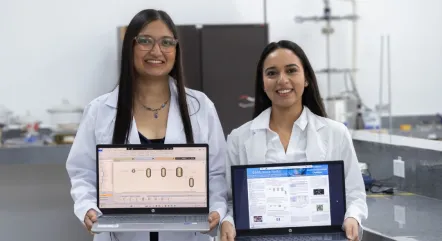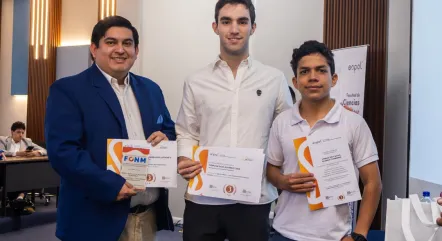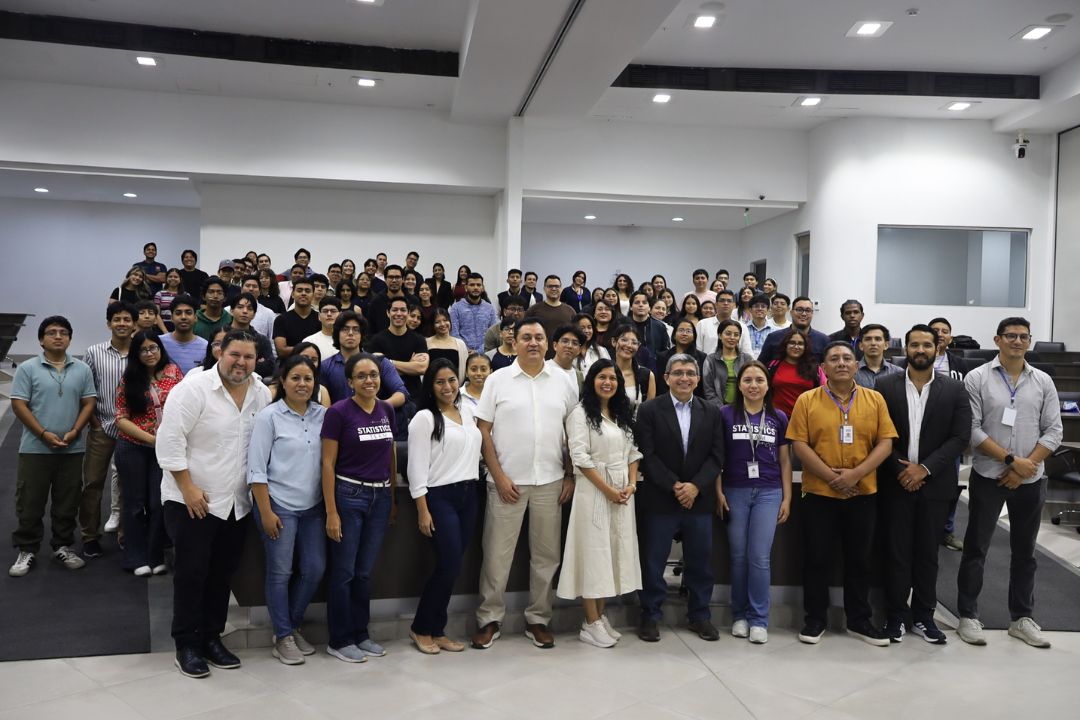


On December 5, the 2nd Data Analysis School concluded successfully, reaffirming its role as a training initiative that extends beyond the classroom and strengthens practical skills in data analysis. Organized by the Statistics program of ESPOL’s Faculty of Natural Sciences and Mathematics (FCNM), the event took place from December 1 to 5 and brought together 1,258 participants.
The 2025 edition was held in a hybrid format and featured topics such as data visualization with Power BI, sampling techniques, spatial and spatiotemporal models, and data analysis using artificial intelligence.
Dr. Eva María Mera, Executive Director of the National Institute of Statistics and Census (INEC), who both taught a course and contributed to the organization of the event, highlighted that nearly 500 participants joined through digital platforms.
“It has a significant impact on the ESPOL community and on the country as a whole,” she stated.
The School featured presentations by international speakers such as Rolando de la Cruz (Chile) and Enrique De La Hoz Domínguez (Colombia), as well as specialists from INEC, ESPOL, and the private sector. Through lectures, workshops, and short courses, participants explored key areas of modern data analysis in greater depth.
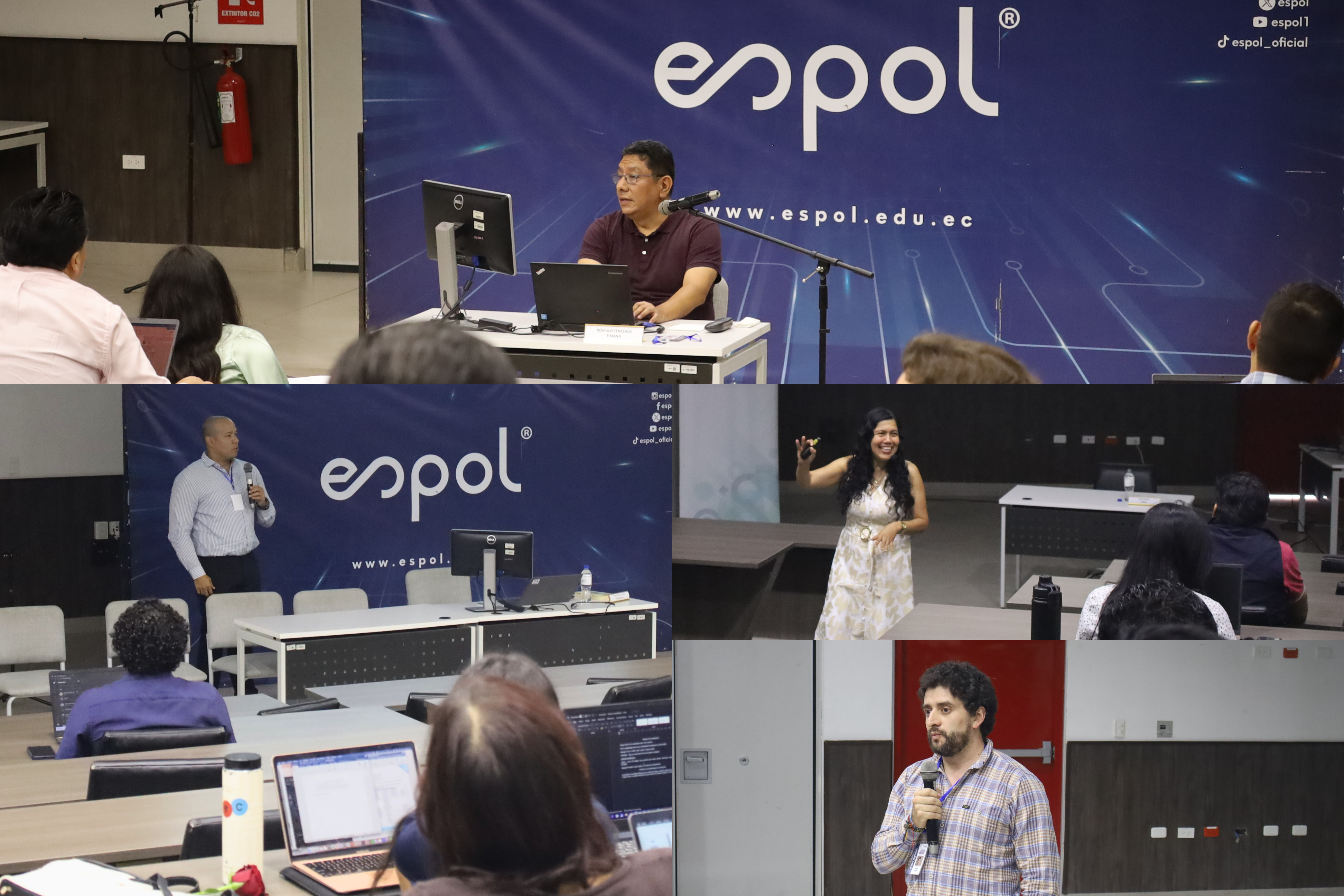
During the opening session, Academic Vice President Paola Romero, Ph.D., emphasized the importance of collaboration between academia and industry in strengthening education and training in this field. FCNM Dean Erwin Delgado, Ph.D., highlighted the strategic role of statistics in a world where data has become an essential resource.
“Its analysis, interpretation, and responsible use enable informed decision-making across a wide range of sectors,” he stated, underscoring the importance of fostering curiosity, critical thinking, and responsibility in the management of information.
Jessica Menéndez, coordinator of the Statistics program, stressed the value of participating in initiatives such as the Data Analysis School as a means for professionals to keep their knowledge and skills up to date.
“Every one of us, as professionals, should have data analysis skills, and this School provides them; that is why it is such a valuable experience.”
The Data Analysis School thus reaffirms its mission of strengthening statistical education and promoting collaboration among academia, government, and industry, while highlighting the strategic importance of data-driven decision-making.